Wampum: a Brief History
When my kids were little, we loved to gather the colorful beans of the mountain laurel and the Mexican buckeye and give them away for fun, not knowing until years later that we were participating in the Native American custom of Wampum.
In honor of Indigenous Peoples’ Day, I’d like to share a brief history of Wampum with you.
Wampum originated in what is now the northeast part of the United States, where the Iroquois, together with several other tribes called the Five Nations of the Haudenosaunee Confederacy, had lived for thousands of years — long before Europeans first arrived in New England. The Five Nations were powerful, peaceful and sophisticated. Their system of governance, which included many democratic principles, has been called the world's first democracy and served as the basis for many of the values in our constitution today.
Wampum derived from the Algonquian word wampumpeag, used to describe small, highly-polished seashells which were traded amongst the tribe and offered as gifts as a sign of trust, right relations and reciprocity. These common practices evolved into the decorative use of the shells in very elaborate belts, which were brought to honor significant events representing diplomacy, dignity and respect. In fact, the first treaty between the Five Nations and the original 13 colonies was marked by the presentation of an enormous Wampum Belt to George Washington, who had helped negotiate the treaty. The George Washington Wampum Belt still exists and is revered as an important symbol of the trust and friendship between the original stewards of the land and the non-Native settlers.
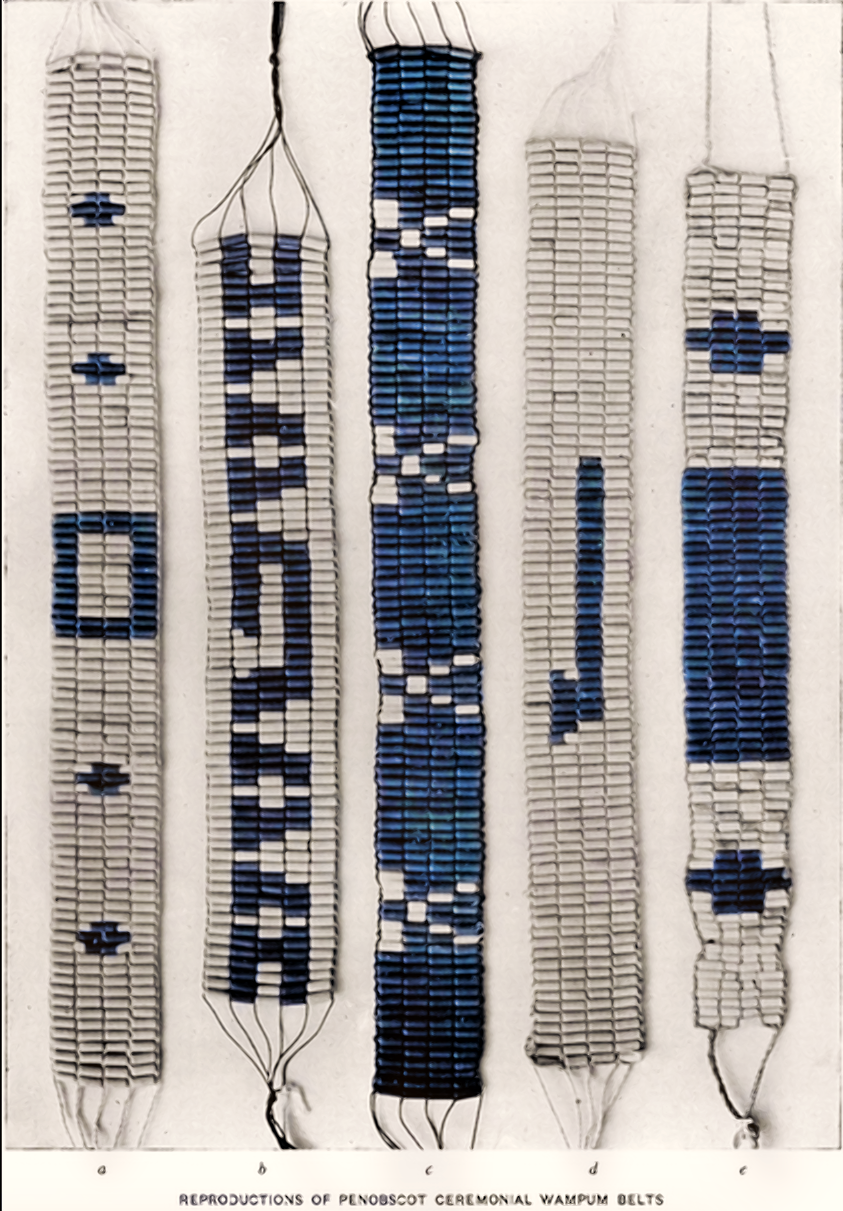
Illustration: Frank Speck, Public domain, via Wikimedia Commons

Trading Wampum between tribes, individuals and for commerce was so common that Europeans believed that Wampum Shells were akin to "money". But to the Indigenous peoples, Wampum was more valuable than European money and trading or gifting it was not a transactional practice.
Native tradition imparted reverence to any items made with Wampum.
It was believed that the physical object and the shells were imbued with the spirit of the occasion, together with the act of giving and acknowledgement between all people present, as well as the relationships of all those gathered together and the intent of the gesture.
The lands and region we now call Central Texas have been an epicenter for migration, trade routes and commerce for thousands of years. Indigenous communities collected the beans of Mountain Laurel trees, just like the ones my kids collected for years. Local tribes such as the Comanche, Caddo and Tonkawa gifted items like hides, pottery, bow wood and jewelry.
The exchange of Wampum represents an honoring of another person, a spiritual exchange beyond mere transaction; so that the gift-giving and receiving is understood as an offering of protection, friendship and healing.
European observers often reported that gift-giving was an extremely important feature of Native culture, but they did not seem to understand the cultural and spiritual nature of the custom. What they were witnessing, without realizing it, was a form of generosity as a mutually beneficial ecosystem.
Indigenous Peoples’ Day is about recognizing the traditions and celebrating the contributions of Native communities and also learning from important history. Indigenous peoples are too often relegated to a distant past, with little recognition of the ways in which Native communities continue to steward practices for living with reciprocity within our society. Traditions like Wampum continue today, serving as an affirmation of right relations, from the past of our shared humanity, to our future.
As we work together to create new mutually beneficial ecosystems, we must consider this: What does it look like to be in right relations with our Native communities and each other?
#
Adapted from the article Wampum History and Austin Powwow by Ray Brimble and Skye Howell, originally published on September 29, 2026 in the Austin American Statesman