Moontowers and the Law of Unintended Consequences
Moon Towers.
What are we talking about here? Something on the moon? Is Elon defiling the lunar surface with towers now?
Ha ha, but no. Moontowers (sometimes called Moonlight Towers) were one of the first public outdoor lighting projects built in the United States. In 1895, Austin, Texas, was still a bit of a frontier outpost. Nevertheless, the city had the audacity to construct 31 soaring steel towers complete with massive carbon-arc lights, which could illuminate entire neighborhoods.
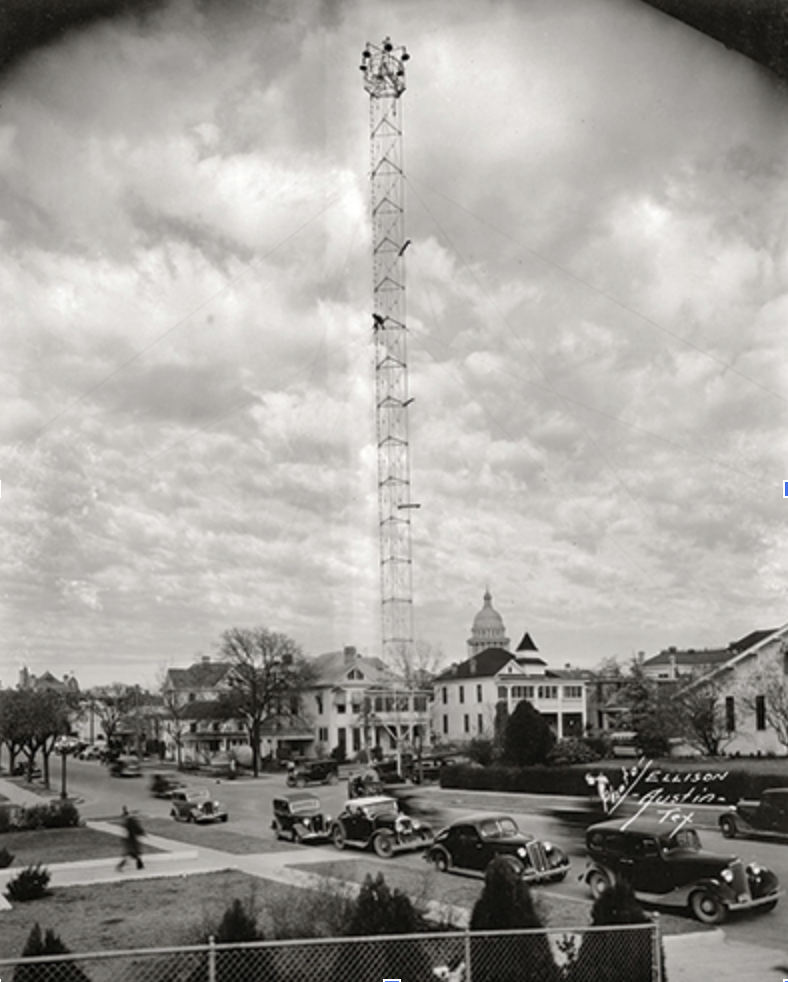
This was all extremely high tech for the time. Electric lights, powered by hydroelectric power—yet another brand-new technology. Kind of the “AI-data-center-powered-by-solar” of its day. But unlike AI data centers, the moonlight towers would turn out to be quite alluring. Folks around town claimed that the light cast from the towers resembled moonlight, hence the name. Can you imagine today’s water-guzzling data centers being described in similar romantic tones?
Besides projecting romantic moonlight, the towers were primarily a practical response to a heinous crime: America's first mass murder. The criminal, who was never caught, was known as the "Servant Girl Annihilator".
When several young ladies, some servants, some "of the night" were found brutally slain around town, it scared the hell out of everyone. Some said it was the work of none other than Jack the Ripper; that he’d somehow managed to slip quietly out of London before being caught for his crimes there and made his way over to America to resume his gruesome legacy in Austin, Texas. Skip Hollandsworth's wonderful book, The Midnight Assassin certainly makes a strong and very detailed case for it all. Whether or not there was a connection, the Moontower system was a response to crimes which had undoubtedly been committed, no matter who had been the perpetrator. Moontowers were meant to be a magnificent new lighting system—which could also deter any future violent acts.
And indeed, the murders did stop—one of the intended consequences of this technology. A further intended consequence was that the towers would eventually become obsolete and—just go away. Check the obsolescence box, if we’re talking about the evolution to more efficient street lights. In the early 20th century the aesthetics of artificially moonlit streets would give way to more utilitarian systems such as incandescent street lamps, the boring ones you still see in every city to this day. That was the plan, but it didn't quite work out that way. There were also unintended consequences associated with putting up the original Moontower system. Thankfully, we live in a world of unintended consequences.
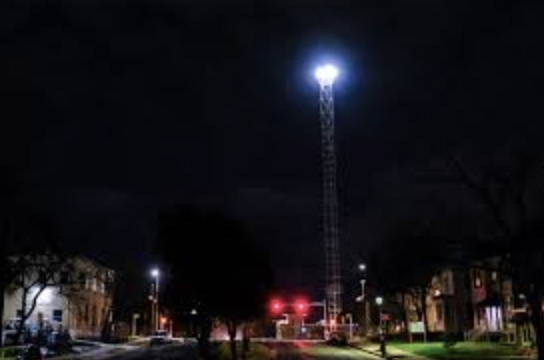
Today, 13 of the Moontowers still stand, are still cool, and still emit that lovely moonlight over entire neighbourhoods. Moontowers have even been featured prominently in one of the (many) party scenes from the movie Dazed and Confused. Before Matthew McConaughey ever uttered the immortal words “alright, alright, alright”, he proclaimed, “Party at the Moontower!” A Moontower even serves as the base of a giant Christmas tree at Zilker Park, where its yearly lighting signals that the holiday season is officially underway. I understand that even Santa loves the Moontowers, because he shows up in Zilker Park every year for the lighting of the Moontower Christmas tree.
The story of these 150-year-old strings of bolted pipe and wire is also a story of the powerful gravity of the law of unintended consequence. It's a reminder that we cannot always envision the final outcomes of any given project, even if we might be able to project the most likely outcomes. Outcomes are funny like that: they don't always cooperate with “likelihoods”. This, I find charming. Just like the Moontowers. Unintended consequences are a powerful gravity force in our world, usually assumed to be of the “worse than expected” variety; but as often as not, what is unintended turns out to be better than what was expected.
It has been said that history does not repeat itself, but often rhymes. If so, then what is the "rhyme" in the moontower story?
To me, it's about how things which start off as practical, commonsense solutions can sometimes morph into a beloved legacy. Is it just about familiarity? Why would a metal pole with lights on top become iconic? I recently spent some time staring at the Moontower across the road from the Sour Duck café (corner of Chicon and MLK), hoping for some inspiration. Lo and behold, my Muse descended! This is what she told me: We love Moontowers because Moontowers are just so weird. What started as a practical approach to stopping Jack the Ripper’s Austin crime spree ended up as a kind of citywide objets d'art. Does it matter if that was intended or not?
So, I ask myself, and I will ask you, dear reader: What Moontowers have we ever built which unintentionally emerged as better than expected, hoped for, planned on; and if we are super lucky, not at all what we built them for? Our very own objets d’art, our personal shrines to the law of unintended consequences. In mid-March 400,000 people from every part of the world will again descend upon Austin for the annual South-By-Southwest gathering. They will eat our tacos, drink our margaritas, race around town on our scooters, and justify why they came here to do that. It's all good! But many of them, perhaps most, will leave town after having discovered that the reason they came was not exactly what they are leaving with. There may be a few epiphanies, whisperings of muses, laws of unintended consequences, good stuff unexpected but most welcomed.
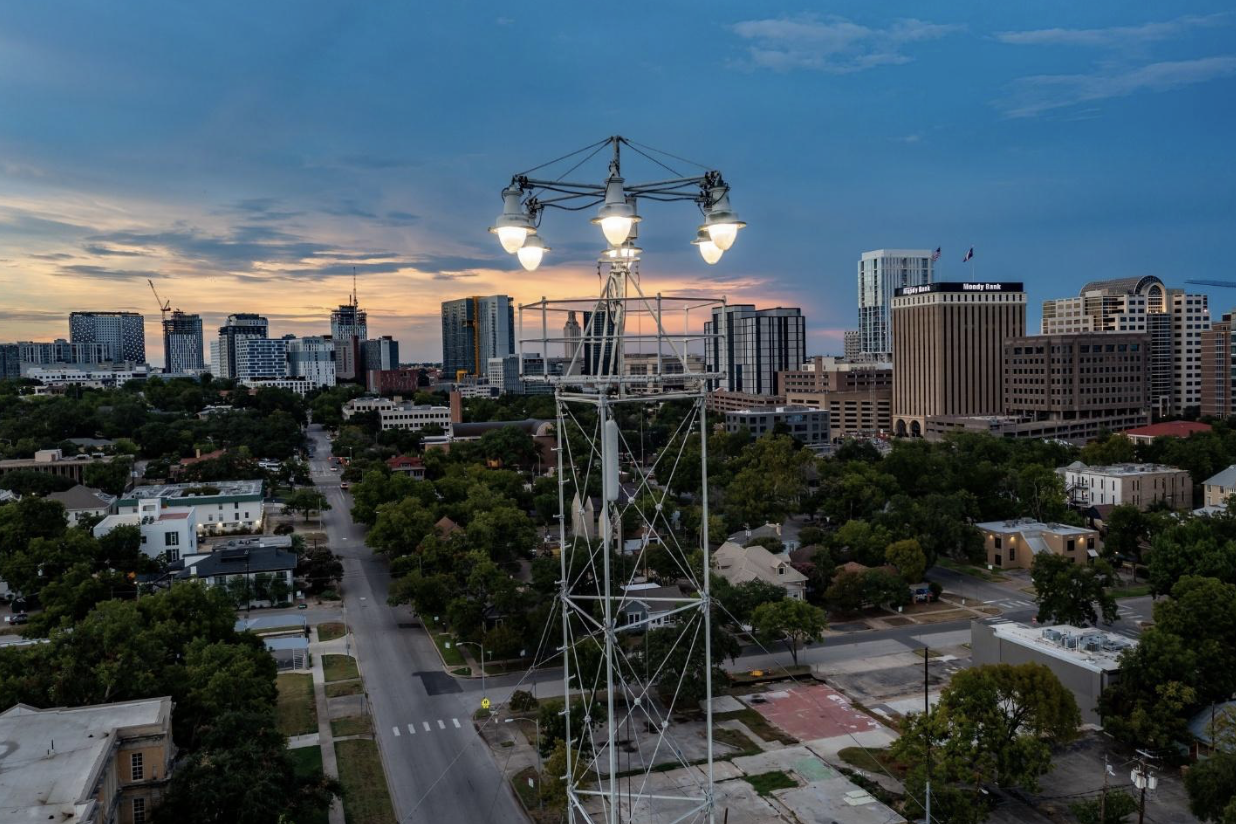
This is what it should all be about: discovery, inspiration, objets d’art emerging from the nuts and bolts, wires and poles around and above us.
So all y’all, don’t forget to occasionally put down that margarita and look up, perhaps right above you, to see what might be there in plain sight. Maybe it will be one of those Moontowers, maybe it will be something else even more beguiling, that you never thought to look for—until you did, and realized that it was there all along. Welcome, again, to Austin—have a good SXSW!