Seek and You Shall Find…when you quit seeking
Have you ever read that book The Borrowers? Written by the British author Mary Norton, it was first published by Dent in 1952, and won the Carnegie Medal that same year.
Okay, I know it's a children's book, but like many children's books it contains profundities. The Borrowers offers an explanation for why we lose things. Keys, our glasses, passports, one of the socks in a matching pair. The book posits that all of these things are stolen — er, "borrowed"— by elf-like creatures who live in the forgotten nooks and crannies of our houses. These rascals are known as "borrowers" and apparently they are quite common, even though no one has ever seen one of them IRL. We’ve all seen their handiwork—I have a drawer full of unmatched socks as evidence.
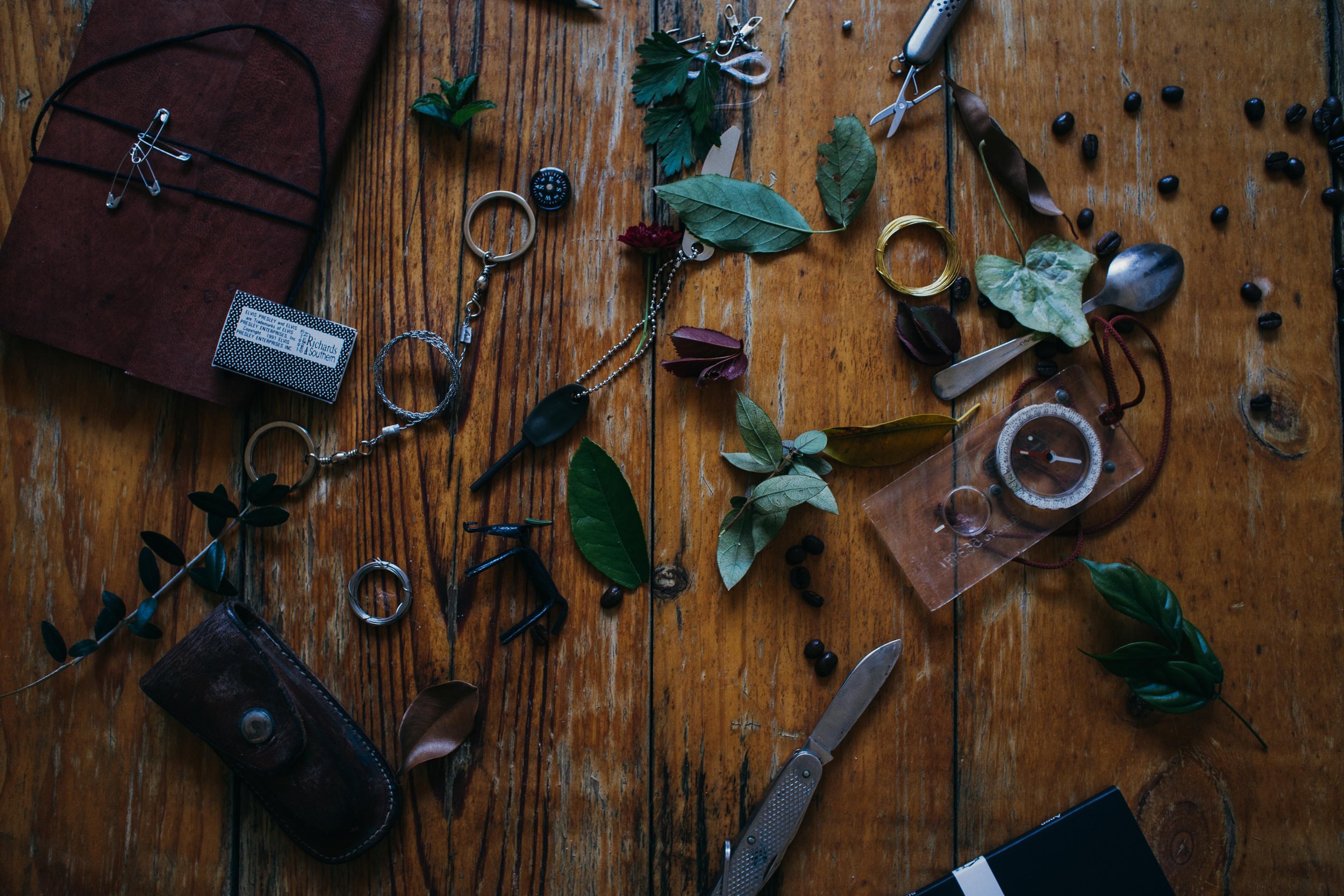
Photo by Rachel Claire
Borrowers believe that “human beans” (that's what they call us) exist to provide them with materials for their own lives. More than likely, that misplaced sock of yours will never be found because it's now a cozy blanket on some little guy’s bed behind the wall of your pantry. This all seems quite impossible to me; so I continue searching for all the many items I’ve lost.
Let’s assume that the tale of the Borrowers is entirely made up. I can get my head around that possibility because some items I lose do re-emerge somehow and if the Borrowers were real, I suppose they would more than likely have already melted down my lost key to create a small bedframe for themselves. No keys coming back to me under these circumstances.
There's something magical about lost items mysteriously reappearing. They tend to do so only when you quit looking for them.
These “lost” items just randomly turning up are sort of like the person hiding in a game of hide and seek, growing weary of you trying to find them. Has your lost key simply given up, returning itself to a place where you can find it again and say, “Tag, you're it”?
Maybe there is a force in the world which provides a kind of gravity, to return lost things in almost direct proportion to the loser of that thing accepting that said thing is lost. This could apply to lost people, lost arguments, misplaced iPhones…maybe even that $20 you lent to your cousin to get him over the hump. I like this theory. Let’s go with it!
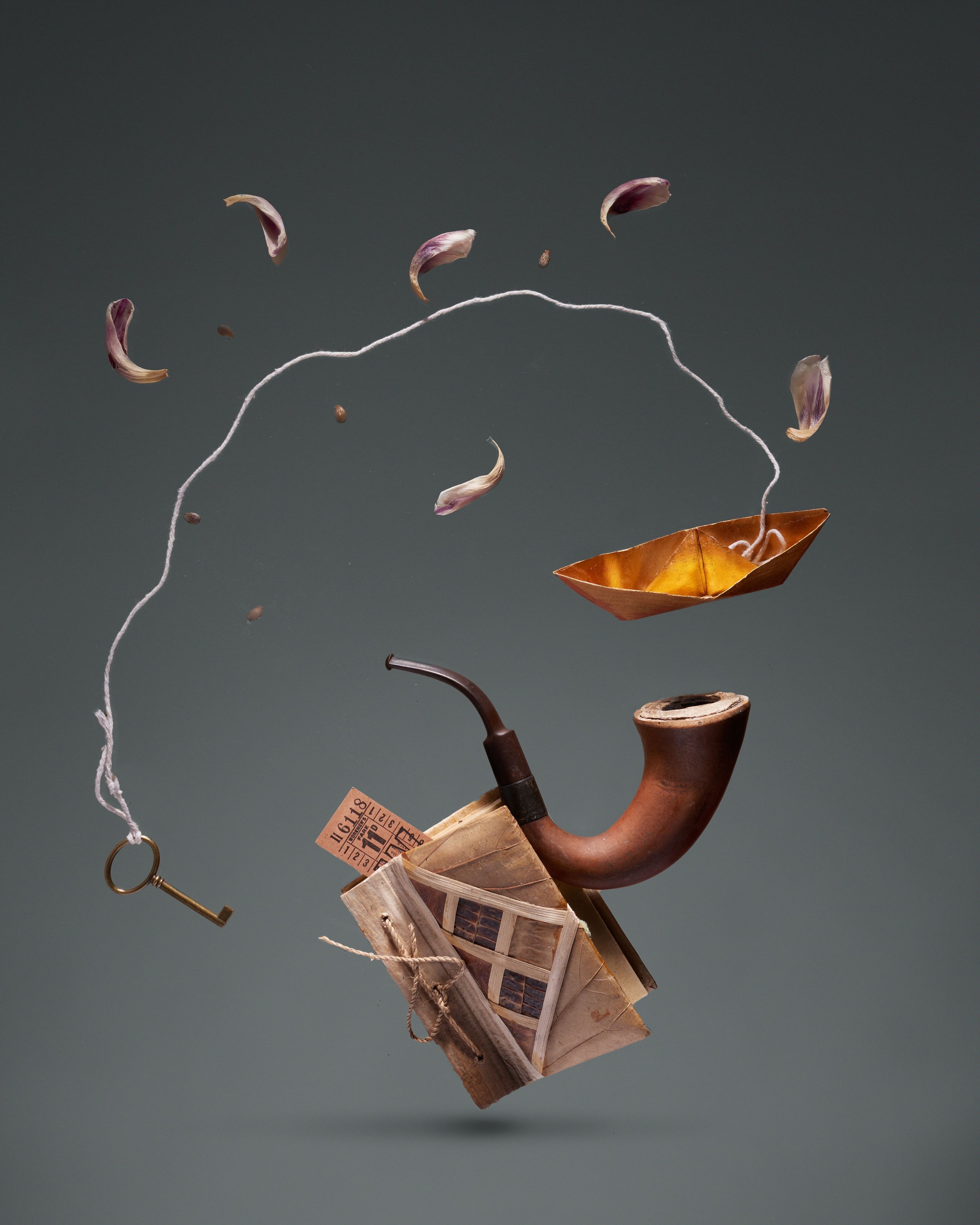
Photo by JJ Jordan
If this acceptance-of-lost-things-gravitational-force really is part of the natural order of things, then how do we cultivate such an acceptance?
After all, we live in an uber-transactional world these days. Cause and effect are tied to give and take, with the most transactional amongst us usually doing the taking and the rest of us doing the giving. “Everybody's looking for something”, as the old song goes. How does one accept a loss, quit wishing for what has disappeared to return, cultivate a willingness to let things go, in such a transactional world? Which is the side of the transaction that stimulates return? In a transactional world, if something is lost, you just look harder, threaten somebody to get them to bring it back, or perhaps even act as if the loss never happened. There’s even such a thing as a “write-off” in our tax system wherein you cede money you’ve lost (and might even get some of it back by counting that loss against profits made on some other transaction). This write-off thing is actually very Borrowers come to think of it. Maybe the tax man is actually a Borrower. He takes your money and then may return a little bit of it back to you at some point in the future. That is, if he hasn’t already turned your money into stuffing for the sofa in his crash pad behind your wall.
The Borrowers tale could be about something we all recognize in the natural world, as well as our daily lives. That is: things come and go, are lost and then found, forgotten and remembered, disdained and revered, die and are reborn.
We instinctively recognize the circular nature of everything in the universe. In a strange way, when we lose our keys, our first reaction might not be to fret that they may be gone forever, but rather to ponder how and where might they reappear. I used to know a man, perhaps his name was Ray, who kept articles of clothing long after they had gone out of fashion under the assumption that some day they would come back in style again. Was he paying homage to the circular nature of nature, or just being cheap? Ray's wife thought the latter and wished that the Borrowers would steal some of those “temporarily out of style” articles of clothing and make little bedspreads out of them. Some of these articles of clothing actually did vanish. Nobody seems to know how, and we patiently await their return.
If we accept that the natural trajectory of things is circular, it would seem to follow that the circle of the lost and then found is out of our control.
Is it truly under the control of little people who live behind the walls of our kitchens? Are these mythical Borrowers actually genuine agents of a universe in which things come and go, but only for a while; and are we ourselves then not the agents of any of the coming and going, no matter how vigorously we search for what we feel has been lost? Maybe we humans are just the observers of it all, even though that song tries to tell us that “..everybody’s lookin’ for something…”. I guess we can’t be sure.
But I will say that I heard a tiny voice singing from inside the wall of my kitchen the other day. Screechy, slightly off tune:
“You might think you’re looking for something that’s lost, but the truth is we have borrowed almost all of it, turned it into bedframes and blankets and whatnot for our home behind this wall. So you can quit looking and just wait patiently for us to maybe bring it back!”
This may very well be the structure of the universe, not as we know it or would like for it to be, but as it really is. With this realization comes the humbling possibility that we are not, after all, in control. We cannot always seek and maybe will not even find—because the real control over whether we’ll get our lost socks or keys back rests solely in the tiny little hands of some little klepto who lives behind the kitchen wall.
Feature Image by Aleksandra Krivdic